
“Far off in the red mangroves an alligator has heaved himself onto a hummock of grass and lies there, studying his poems.”
Mary Oliver
One of the most profound things that you observe as you travel across our great nation is just how different the landscape changes. The US holds an astonishing number of different ecosystems and habitats. You can wake up one morning gazing out at waves crashing along the shore, only to find yourself another morning shaded by towering mountain peaks. You may find yourself surrounded by cacti and red dirt or taking in the fiery reds, oranges, and yellows in an autumn deciduous forest.
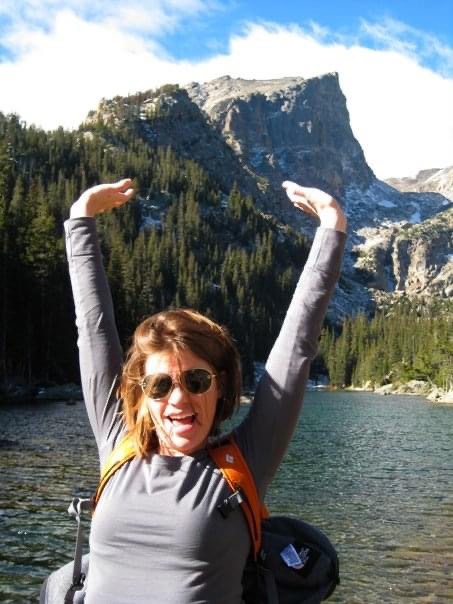
I always knew that the US held amazing sights. I discovered this fact outside of the pages of a book in my early 20s. The first time I visited the Rocky Mountains took my breath away and the term “mountain” earned new respect for me.
What I didn’t do in my 20s… heck, what I didn’t do necessarily in my early 30s… was to not just catch the glimpse. The moments in which I was rewarded with varying landscapes across the US were quick and seemingly unintentional.
Dan and I found an early love for our national parks. We jokingly (I think it was before it became a social media “thing”) said that we should visit them all before we died. It would become our bucket list that we did together.
We’ve already achieved a lot. Together, we’ve visited 29 national parks. And it’s been amazing.
But, I realize now, those mini vacations we took where we stopped in and toured national parks, on many occasions for only a day, were just a glimpse into these majestic lands. This adventure we’re on, where we travel the country and camp on a full time basis, gives us the opportunity to do so much more. And for that, I’m thankful.
Biscayne National Park
We first visited Biscayne National Park in 2018 when our kids were only 4 and 1.5 years old. We flew down to Florida for my cousin’s wedding and stopped in both Biscayne and the Everglades. Our first visit to the park was a quick stop and literally a stamp in our passport book. We knew that the park held more than what we saw, but without a boat or making reservations for a tour, there wasn’t much more that we could do.
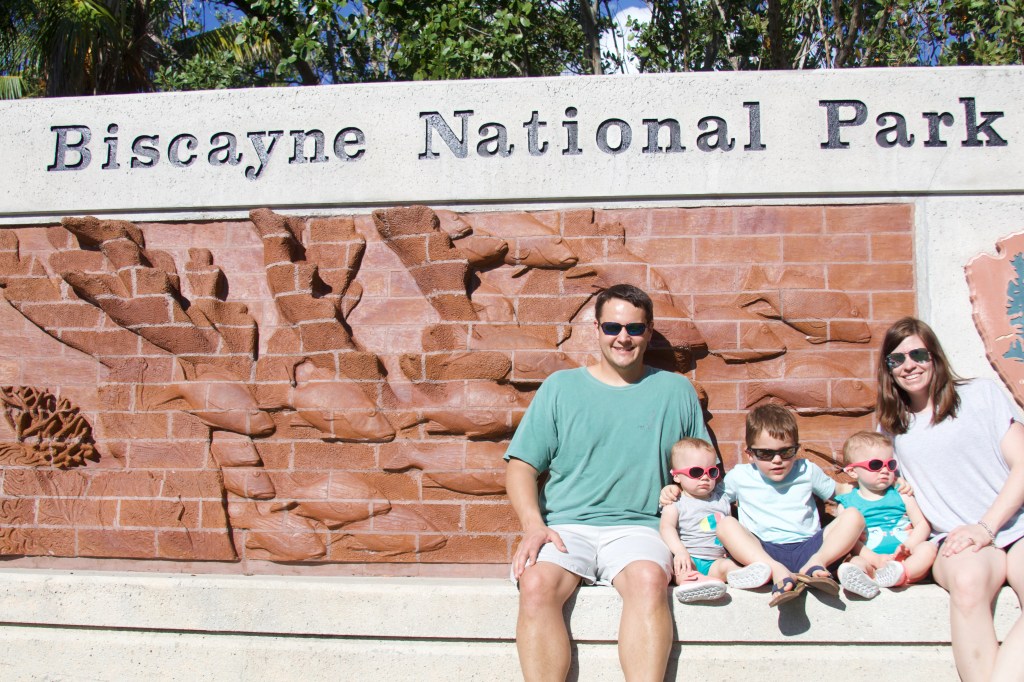
Being down in southern Florida, we knew we wanted to stop at Biscayne so our kids could earn their Junior Ranger badge and we could explore the park a little bit more. We prepared ahead this time, however, and brought our inflatables so we could get out into the bay.
Biscayne National Park is located just off the southeastern coast of Miami. Biscayne was established as a national park in 1980, and it protects mangrove forests, coral reefs, many Florida Keys, and the waters of Biscayne Bay.
The mangrove forests that line the bay play a vital role in sustaining the marine ecosystems by providing a nursery for 70% of the fish species that live there. Birds flock to the tops of trees, and you can spot spoonbills, ibises, herons, and pelicans along the shores.
Bordering Biscayne Bay are various Florida Keys, which provide an additional home to more marine wildlife. Here you can snorkel in lagoons and along coral reefs to see many other types of fish and marine animals.
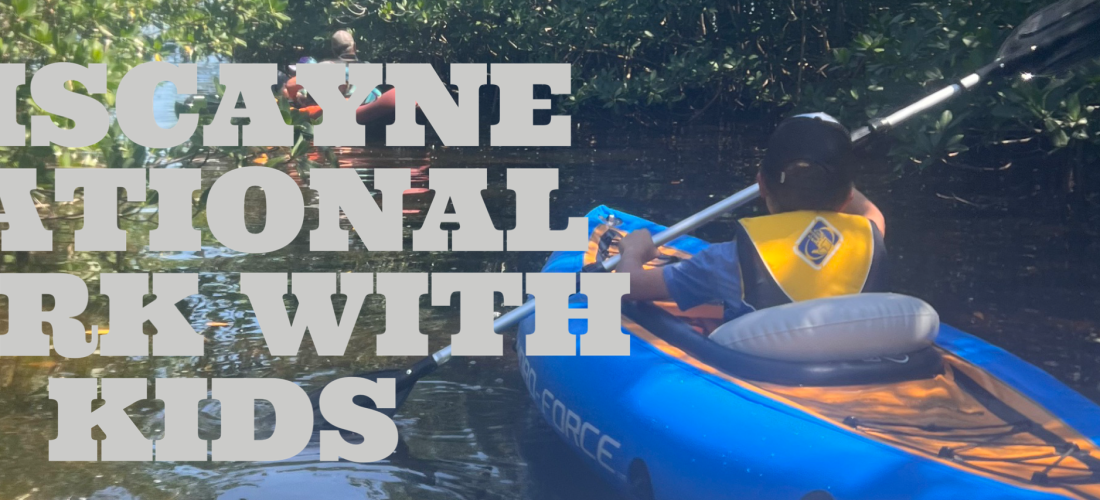
Exploring Biscayne National Park with Kids – Kayak, Paddleboard, or Canoe
Being that the majority of this national park is a marine ecosystem, the absolute best way to explore the park is on the water. We were able to bring our inflatables with us to explore the park. But no worries if you do not have watercraft that you are traveling with, tours are available to book through the Biscayne National Park Institute. You can find tour prices and descriptions listed here.
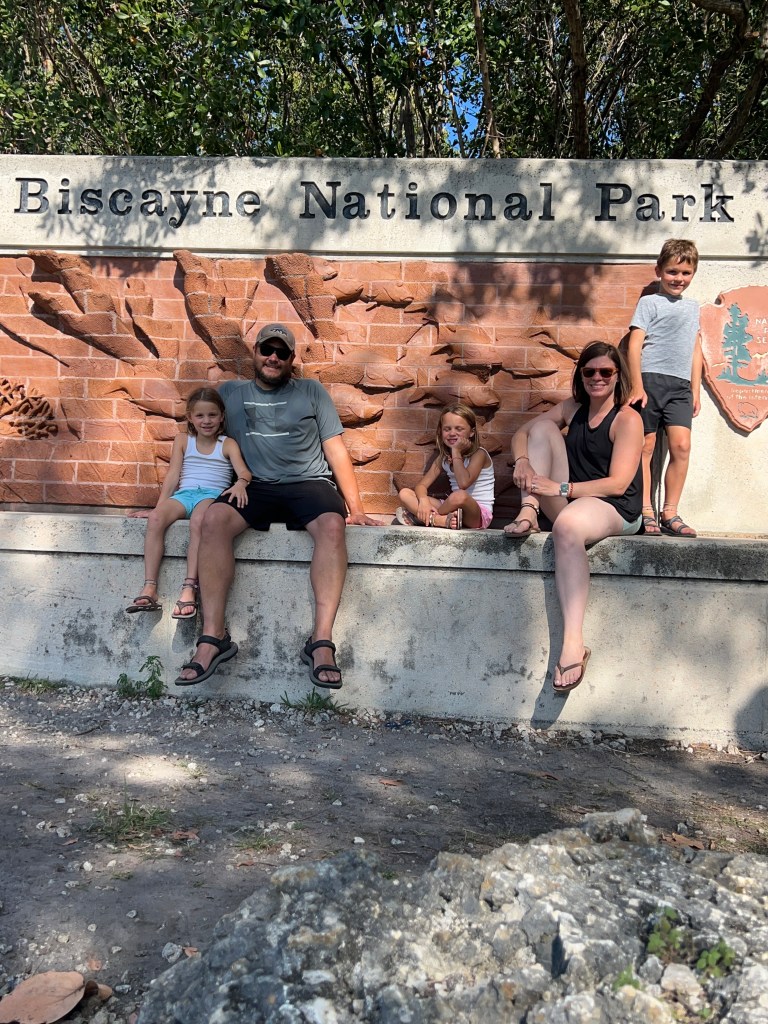
The first thing you will want to do is visit the Biscayne Visitor Center. The visitor center is located in Homestead, Florida. Here, you can find some exhibits on the ecosystems surrounding the bay, as well as talk to a ranger. We were able to look at maps the ranger showed us and see suggested kayak paddling routes.
After visiting the visitor’s center, you can launch your paddleboards and kayaks at the marked launch in the same parking area. From here, you are free to explore!
Immediately, you can skirt the shorelines and study the mangroves. Mangrove trees are simply magnificient to look at closely, and it is a marvel how their roots grow in such an interesting way. There are a few sloughs where you can paddle into the mangroves. We honestly had no worries about getting lost. The sloughs were incredibly slow moving and the ranger had told us that no matter how far in we got, they always connect back together and lead to either a canal or the bay.
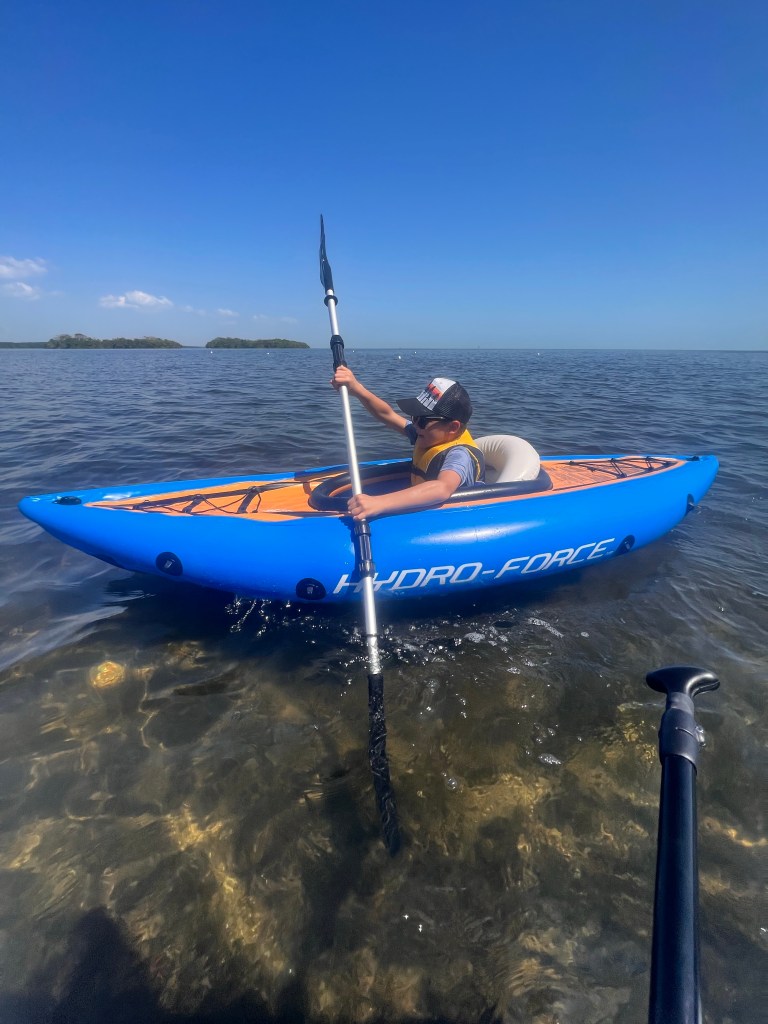

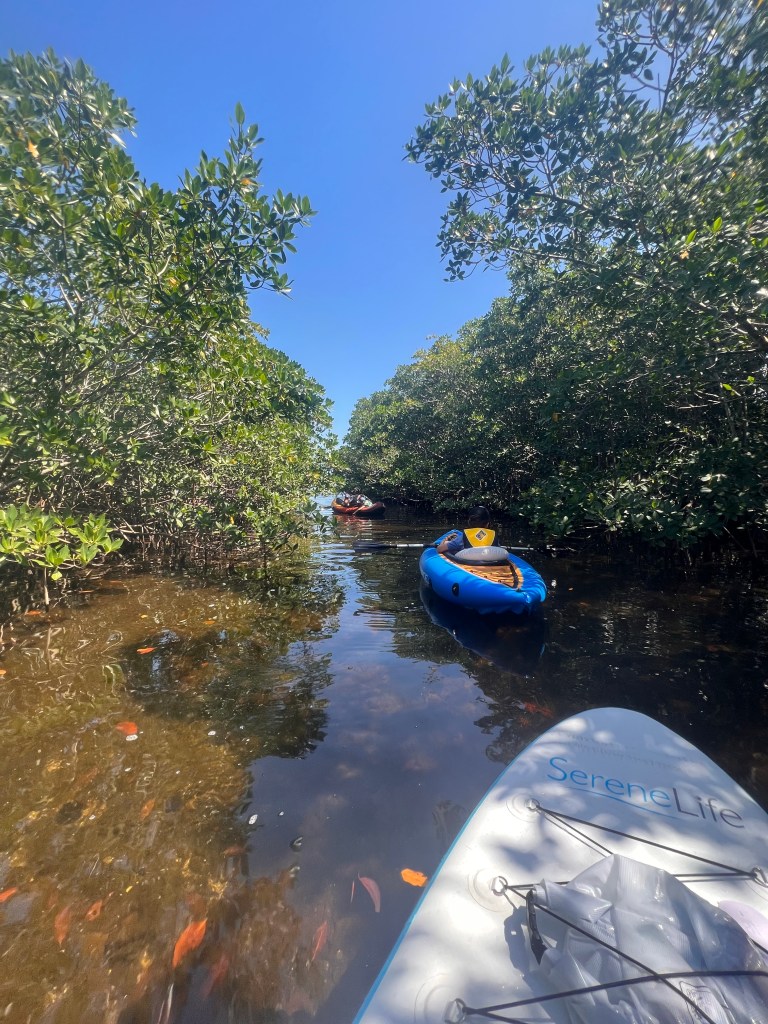
It was in these mangrove sloughs that we found a huge variety of fish. Schools of mullet darted around our paddles and jumped out of the water in front of us. We saw ibises take off from their roosts in the trees and observed jellyfish floating in the waters beside us.
When you aren’t paddling in the mangroves, paddle around the sea grass flats in Biscayne Bay. Here you can find an abundance of different wildlife. Our favorite that we saw were two barracuda. The waters here are shallow and clear, allowing you to see all the way to the bottom of the bay.

The best thing about exploring the park via the water is that you can decide how long you want to stay out. We were out on the water for about two hours before we trekked back across the bay and to the visitor center. Once we arrived at the visitor center, we allowed the kids to jump out in the shallow water and get themselves wet!
One nice part the paddle experience at Biscayne is the accessibility of the water access. The launch area is large and easy to load and unload your watercraft. There is also a freshwater hose near the kayak launch so that you can rinse off your gear from the saltwater. Take a picnic lunch to eat by the water when you are finished!
Junior Ranger Badge
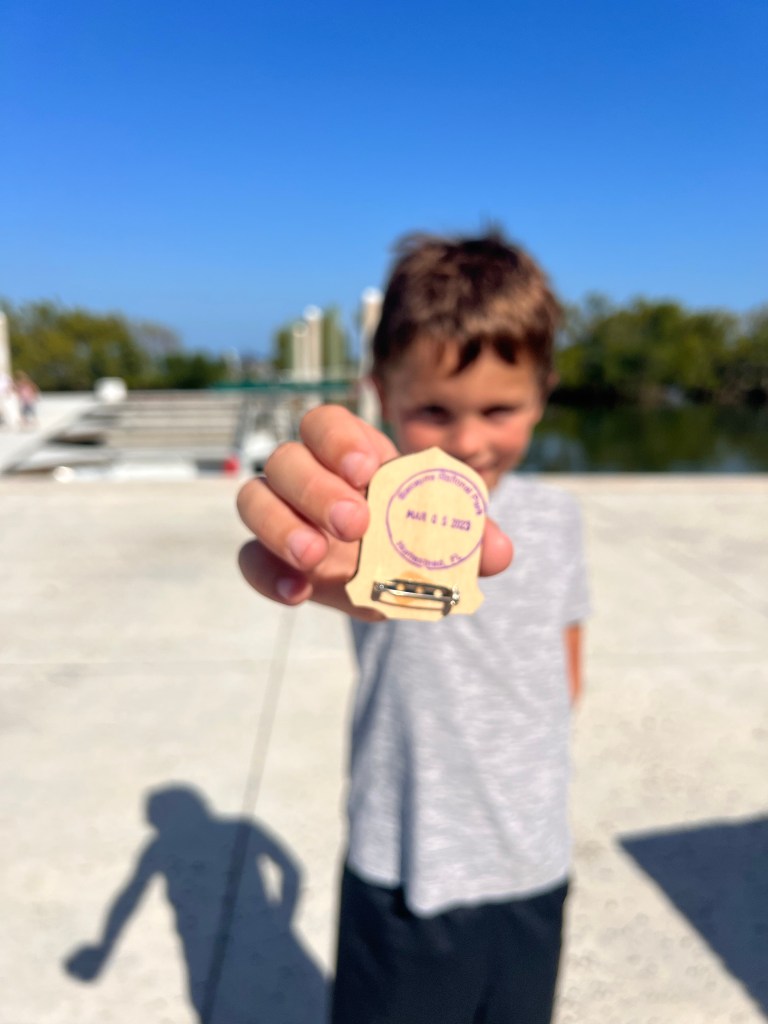
Like the other national parks in our national park system, your children can also earn a junior ranger badge while here. The cool thing, however, is that Biscayne Bay has partnered their junior ranger program with nearby Everglades National Park and Big Cypress National Preserve.

While you can earn an individual badge at Biscayne, the junior ranger book is actually combined for all three. To earn a badge at Biscayne, complete three of the “dolphin” activities in the book. Once those are complete, show your work to a ranger and earn your badge.
The best part? Once you earn badges at all three national parks, you can earn a patch for all three parks. We picked up our booklet at Biscayne and earned the badge there. Then we took our book home and the kids completed the remainder of the activities while at home. When we visited Everglades and Big Cypress the following weekend, we were able to earn our patch!
More of Biscayne National Park
Quite possibly, the best way to get our and see Biscayne National Park is by getting on the water. If you are an experienced kayaker, or if you are able to book a tour, I have heard from the rangers that accessing the keys bordering Biscayne Bay are simply magical. There are lagoons to go snorkeling and other opportunities to view wildlife on these small islands.
We were unable to access these further islands, but maybe one day we will find ourselves back here. What I am most grateful for after this recent trip was the ability to see the national park from the water. Being able to take the kids out on the water and immerse them in the wildlife and plantlife growing on the shores of southern Florida was amazing.
If you ever find yourself visiting southern Florida, we highly recommend a stop at Biscayne National Park!
 Our Pickett Fences